Introduction
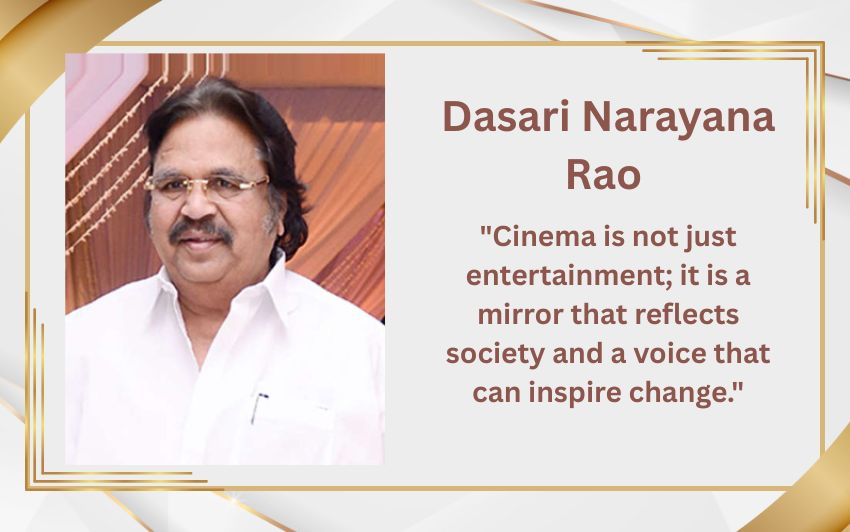
Dasari Narayana Rao (1942–2017) was a legendary figure in Telugu cinema, widely respected as a director, producer, screenwriter, actor, and politician. With a career spanning more than five decades, he directed over 150 films, produced several others, and was known for addressing social issues through cinema. In addition to his cinematic achievements, Dasari Narayana Rao served as a Member of Parliament and contributed to regional politics.
Often called “Darsaka Ratna” for his outstanding direction and creative vision, he left an indelible mark on Tollywood and Indian cinema.
Early Life and Education
Dasari Narayana Rao was born on May 4, 1942, in Palakollu, West Godavari district, Andhra Pradesh. Born into a modest family, he developed an early interest in literature, storytelling, and performing arts.
He completed his education locally and showed remarkable talent in writing and dramatics, which laid the foundation for his future career in cinema. His early exposure to rural life and social issues later became a hallmark of his films, which often highlighted themes of poverty, injustice, and human values.
Entry into Cinema
Dasari Narayana Rao entered the Telugu film industry in the 1960s as an assistant director and scriptwriter. His talent for storytelling and social commentary quickly brought him attention.
- His directorial debut was with Thatha Manavadu (1972), which became a commercial success.
- Rao’s films were characterized by a blend of commercial appeal and social messages, often addressing issues such as corruption, women’s empowerment, and rural hardships.
Rise as a Filmmaker
Over the next few decades, Dasari Narayana Rao became one of the most prolific filmmakers in Telugu cinema.
Key Contributions:
- Directed over 150 films across genres including drama, social issues, mythological, and comedy.
- Known for strong women-centric films such as Meghasandesam and Meghasandesam.
- Introduced new actors and technicians to Tollywood, shaping the careers of many stars and filmmakers.
- Recognized for his unique storytelling style, combining emotional depth with mass appeal.
Notable Films:
| Year | Film | Key Highlights |
|---|---|---|
| 1972 | Thatha Manavadu | Directorial debut, blockbuster |
| 1975 | Tata Manavadu | Social drama with family values |
| 1978 | Maa Bhoomi | Critically acclaimed, rural themes |
| 1980 | Premabhishekam | Popular romantic drama |
| 1986 | Sardar Papa Rayudu | Mass entertainer with political undertones |
| 1995 | Chanti | Family drama, commercial success |
| 2001 | Manasantha Nuvve | Romantic drama, youth appeal |
Acting Career
Though primarily a director and producer, Dasari Narayana Rao also appeared in several films, showcasing his versatility as an actor. His on-screen presence was often characterized by commanding dialogue delivery and expressive performance, complementing his narrative style as a filmmaker.
Political Career
Dasari Narayana Rao was not only a cinematic genius but also a political figure.
- Served as a Member of Parliament (MP) representing the Congress Party.
- Advocated for the welfare of the Telugu film industry and regional social issues.
- Known for promoting cultural policies and supporting the arts in Andhra Pradesh and Telangana.
Awards and Recognition
Dasari Narayana Rao’s contributions were widely recognized:
- Padma Bhushan (2012) – India’s third-highest civilian award for his contributions to arts and cinema.
- Nandi Awards – Multiple wins for direction and production.
- Filmfare Awards South – Honored for his excellence in filmmaking.
- Lifetime Achievement Awards – Recognized by various film organizations and cultural institutions.
Personal Life
Dasari Narayana Rao was known for his humility, discipline, and mentorship.
- Married with children, he balanced family life with his professional commitments.
- Mentored numerous actors, directors, and technicians in Telugu cinema.
- Maintained close ties with cultural and social organizations, promoting arts and literature.
Legacy
- Rao’s films often carried strong social messages, addressing injustice, inequality, and human values.
- He is remembered as a visionary director who redefined Telugu cinema with both commercial and meaningful films.
- His contributions to Telugu culture and politics continue to inspire new generations of filmmakers and leaders.
- He remains an icon for combining art, mass appeal, and social responsibility in cinema.
Conclusion
Dasari Narayana Rao’s life is a remarkable journey of creativity, leadership, and social commitment. From a young storyteller in West Godavari to a legendary filmmaker and political leader, his contributions have shaped Telugu cinema and regional culture.
His films continue to entertain, inspire, and educate audiences, and his vision of socially conscious cinema remains a benchmark for filmmakers today. Rao’s legacy as a director, actor, producer, and politician ensures his place as one of the most influential personalities in Andhra Pradesh and Indian cinema history.