
Introduction
Mahatma Gandhi, whose full name was Mohandas Karamchand Gandhi, is known as the Father of the Nation in India. He was born on October 2, 1869, in Porbandar, a small town in Gujarat. Every year, this day is celebrated as Gandhi Jayanti, a national holiday, and also as the International Day of Non-Violence. Gandhi’s life and teachings continue to inspire millions of people all over the world.
Early Life and Education
Gandhiji belonged to a simple and religious family. His father, Karamchand Gandhi, was the Diwan (chief minister) of Porbandar, and his mother, Putlibai, was a pious lady who deeply influenced him with her spiritual values.
After completing his early education in India, Gandhi went to London in 1888 to study law. After becoming a barrister, he returned to India but soon moved to South Africa to practice law. It was there that he faced racial discrimination and began his journey as a social reformer and freedom fighter.
Struggle in South Africa
In South Africa, Gandhi faced injustice when he was thrown out of a train for refusing to leave the first-class compartment, even though he had a valid ticket. This incident changed his life forever. He started to fight against racial discrimination and injustice through peaceful means.
He founded the concept of Satyagraha, which means “truth-force” or “insistence on truth.” This was the beginning of his non-violent resistance movement. His successful struggle in South Africa made him a respected leader and prepared him for the bigger fight for India’s independence.
Freedom Movement in India
Gandhiji returned to India in 1915 and soon became the leader of the Indian National Congress. He believed that freedom could be achieved only through non-violence (Ahimsa) and truth (Satya). He encouraged Indians to unite, boycott British goods, and promote Swadeshi — the use of Indian-made products.
Some of the major movements led by Gandhi were:
-
Non-Cooperation Movement (1920–22) – Urging Indians to withdraw from British institutions.
-
Civil Disobedience Movement (1930) – Breaking unjust British laws peacefully, such as during the famous Dandi March where Gandhi made salt from seawater to protest the salt tax.
-
Quit India Movement (1942) – Demanding immediate British withdrawal from India with the slogan “Do or Die.”
These movements united the entire nation and brought millions of common people into the freedom struggle.
His Principles and Philosophy
Mahatma Gandhi’s life was based on truth, non-violence, simplicity, and love for humanity. He wore simple hand-spun clothes made of khadi and encouraged everyone to support Indian handlooms. He believed in self-reliance and rural development.
His philosophy was not only political but also moral and spiritual. He said, “Be the change you wish to see in the world.” He believed that real strength lies in forgiveness, not in revenge.
Last Days and Legacy
After India gained independence in 1947, Gandhi worked for peace and unity among Hindus and Muslims during the partition. Sadly, on January 30, 1948, he was assassinated by Nathuram Godse in New Delhi. His death was a great loss to the nation and the world.
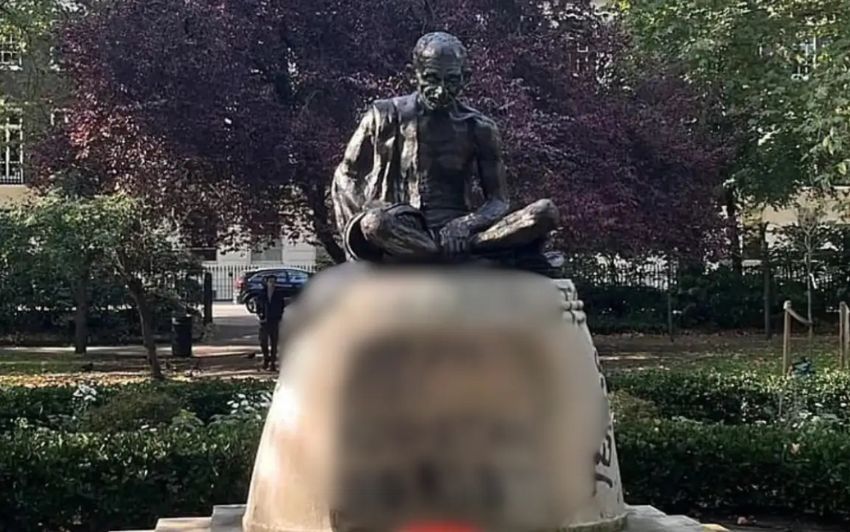
Even today, Gandhiji’s ideals inspire leaders and social reformers around the globe. His methods influenced personalities like Martin Luther King Jr., Nelson Mandela, and Dalai Lama. His portrait is on Indian currency, and his statue stands tall in many countries as a symbol of peace and non-violence.
Conclusion
Mahatma Gandhi lived and died for truth and peace. His whole life was a message to humanity. He proved that freedom can be achieved not by violence, but by love and moral strength. His teachings of truth, non-violence, and simplicity remain relevant even in today’s world.
Truly, Mahatma Gandhi deserves to be called “The Father of the Nation” for his endless dedication, sacrifice, and love for his country.