Introduction
Bhimrao Ramji Ambedkar, popularly known as B. R. Ambedkar, was a visionary leader, social reformer, economist, jurist, and politician who played a pivotal role in shaping modern India. Born on April 14, 1891, in Mhow, Madhya Pradesh, Ambedkar belonged to a family that faced untold hardships due to the rigid caste system prevalent in India. Despite societal discrimination, he pursued education with remarkable determination, eventually earning degrees from prestigious institutions like Columbia University and the London School of Economics. Ambedkar's intellectual brilliance and relentless dedication laid the foundation for his lifelong mission to secure justice, equality, and social reform.
Early Life and Struggles
Ambedkar's early life was marked by extreme hardships. As a member of the Mahars, a community considered “untouchable,” he faced discrimination and exclusion in schools, public places, and religious institutions. Despite these obstacles, Ambedkar excelled academically, becoming a symbol of perseverance and determination. His thirst for knowledge took him abroad, where he studied economics, political science, and law. These experiences not only broadened his worldview but also strengthened his resolve to fight for the rights of marginalized communities in India.
Champion of Social Justice
B. R. Ambedkar dedicated his life to uplifting the oppressed and marginalized sections of society, particularly Dalits. He tirelessly campaigned against social discrimination and untouchability, advocating for education, equal opportunities, and legal rights for all citizens. Ambedkar was instrumental in framing laws that promoted social equality and justice. His work challenged age-old social hierarchies and inspired millions to fight for their rights. Through his writings, speeches, and activism, Ambedkar laid the foundation for a more inclusive and equitable society.
Architect of the Indian Constitution
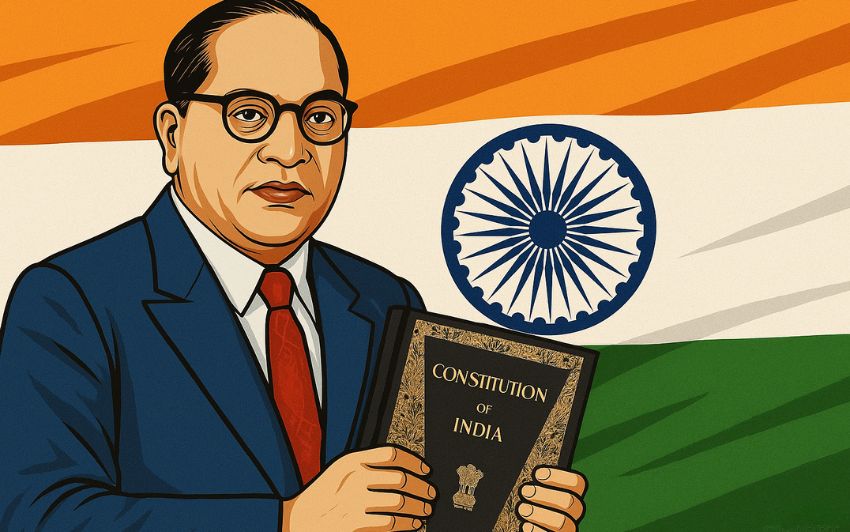
Ambedkar’s most enduring legacy is his role as the Chairman of the Drafting Committee of the Indian Constitution. Appointed in 1947, he faced the enormous task of crafting a legal framework that would unify a diverse country while ensuring justice, liberty, equality, and fraternity for all citizens. Ambedkar’s vision was deeply influenced by his commitment to social justice, human rights, and democracy.
Under his leadership, the Indian Constitution incorporated landmark provisions such as fundamental rights, abolition of untouchability, protection of minority rights, and the reservation system for disadvantaged communities. His meticulous approach ensured that the Constitution was not merely a legal document but a powerful instrument of social transformation. Ambedkar’s contribution guaranteed that India would emerge as a democratic nation committed to equality and justice.
Legacy and Impact
B. R. Ambedkar’s legacy extends far beyond law and politics. He inspired generations of Indians to challenge injustice, fight discrimination, and value education as a tool of empowerment. Ambedkar’s emphasis on social reform, economic equality, and democratic governance remains relevant even today. He was posthumously awarded the Bharat Ratna, India’s highest civilian honor, in recognition of his monumental contributions.
Ambedkar’s life reminds us that true leadership is not merely about power, but about courage, vision, and compassion. His work transformed India into a nation guided by principles of justice and equality. Every year, his birth anniversary on April 14 is celebrated as Ambedkar Jayanti, honoring his contributions to society and the nation.
Conclusion
B. R. Ambedkar’s journey from a marginalized child to the architect of the Indian Constitution is a testament to resilience, intellect, and unwavering commitment to justice. His vision shaped the foundation of modern India, ensuring that every citizen, regardless of caste, religion, or gender, could aspire to equality and dignity. Ambedkar’s life and work continue to inspire millions to strive for a society free from discrimination and inequality. As the father of the Indian Constitution, his legacy remains immortal, reminding us that justice, liberty, and equality are the cornerstones of a true democracy.