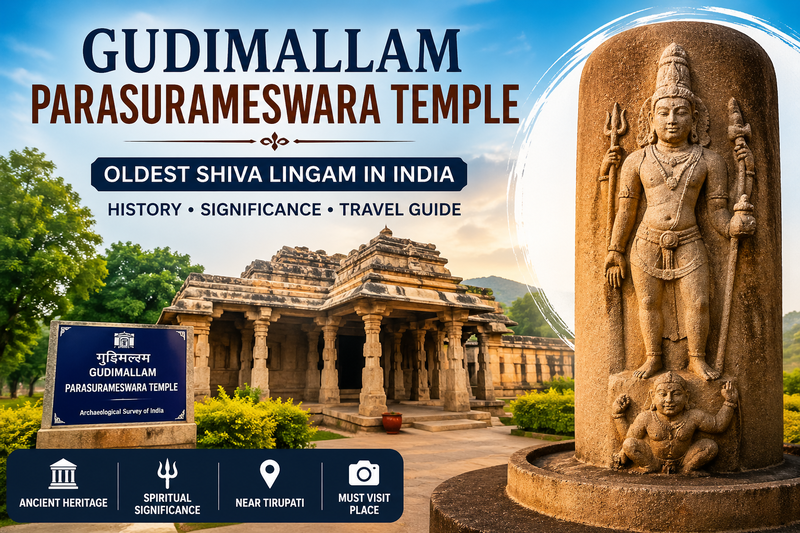
Located near Tirupati, the ancient Gudimallam Parasurameswara Temple is one of the oldest known Shiva temples in India. This unique temple is famous for its rare Shiva Lingam, believed to date back to the 2nd century BCE. Unlike typical lingams, this one features a carved human figure of Lord Shiva standing on a dwarf demon, making it a remarkable piece of early Indian sculpture. Surrounded by peaceful greenery and a calm rural setting, the temple offers a spiritual and historical experience for devotees and history lovers alike. The temple may not be very large, but its cultural and religious value is immense. Visiting this sacred place gives a glimpse into ancient Hindu traditions and architectural styles that have survived for thousands of years.
Key Details:
History / Background:
- The temple is believed to be built during the pre-Satavahana period.
- The Shiva Lingam is considered one of the oldest in India, dating back over 2000 years.
- The structure was later renovated during the Pallava and Chola periods.
Importance / Significance:
- Dedicated to Lord Shiva in the form of Parasurameswara.
- The lingam is unique as it shows a full human form of Shiva carved on it.
- It represents early Shaivism and ancient worship practices.
Booking / Entry Details:
- Entry is free for all visitors.
- No online booking required.
- Open daily, generally from morning to evening.
Accommodation / Stay Info:
- Best to stay in Tirupati, which has many hotels and lodges.
- Budget to luxury accommodations are available near Tirupati temple areas.
Places to Visit Nearby:
- Tirumala Venkateswara Temple
- Sri Kapileswara Swamy Temple
- Chandragiri Fort
- Sri Kalahasti Temple
Travel Tips / Best Time to Visit:
- Best time to visit is from October to March.
- Early morning visits are peaceful and less crowded.
- Carry water and basic items as facilities are limited.
Interesting Facts:
- The lingam is carved from a single stone.
- It is considered the earliest known example of anthropomorphic Shiva.
- The temple is maintained by the Archaeological Survey of India.