
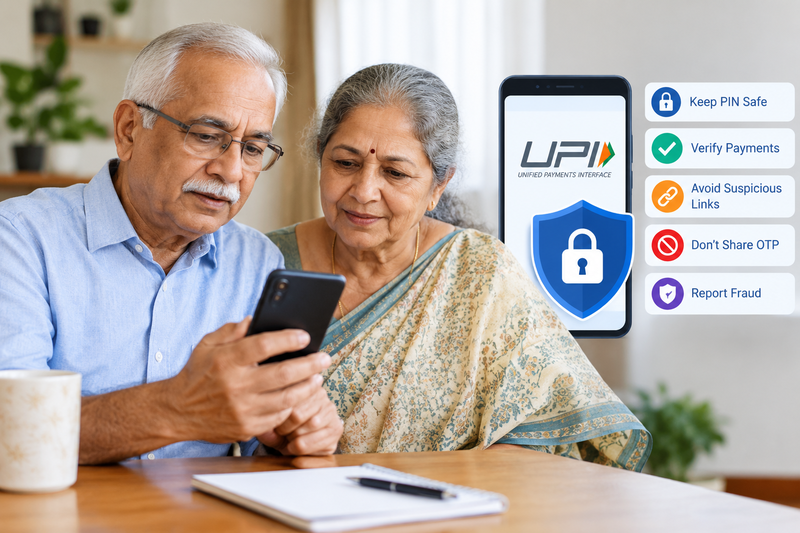
Digital payments through the Unified Payments Interface (UPI) have made money transfers faster and more convenient. However, elderly users may be vulnerable to online scams involving fake payment requests, fraudulent phone calls and malicious links. Following basic safety precautions can help older adults use UPI more securely and reduce the risk of financial fraud.
Here are seven important UPI fraud prevention tips that families can share with their elderly parents.
1. Never Share Your UPI PIN or OTP
A UPI PIN and one-time password (OTP) are confidential security details that should never be shared with anyone. Fraudsters may pretend to be bank officials or payment app representatives to obtain this information. Remind elderly parents that they should never disclose these details, even if a caller claims to be contacting them on behalf of their bank.
2. You Do Not Need a UPI PIN to Receive Money
A UPI PIN is used to authorise certain transactions, not to receive money. Scammers may exploit this misunderstanding by asking users to enter their PIN to claim a refund, prize or payment. Elderly users should avoid following such instructions and carefully verify any transaction before approving it.
3. Verify Every Payment Request
Before approving a UPI transaction, check the recipient's name and the amount displayed on the screen. Unexpected payment requests should be treated cautiously, especially when the purpose of the transaction is unclear. If a request seems suspicious or confusing, reject it rather than proceeding without verification.
4. Avoid Unknown Links and Applications
Fraudsters may send malicious links through SMS, WhatsApp or email to trick users into visiting fraudulent websites or downloading unfamiliar applications. Such links and apps may expose users to security risks. Elderly parents should avoid clicking unknown links, installing unverified apps or entering banking information on suspicious websites.
5. Be Careful With Calls From Unknown People
Scammers may impersonate bank employees or payment app executives and pressure users into revealing OTPs, PINs or other confidential information. If an unknown caller requests these details, parents should end the call. They can then contact their bank or payment service through its official customer support channels to verify the claim.
6. Enable Transaction Alerts and Set Limits
Where these features are available, families can help elderly users establish suitable UPI transaction limits and enable alerts for every transaction. These precautions can make unusual payments easier to identify. Promptly checking transaction notifications can also help families respond quickly if suspicious activity occurs.
7. Report UPI Fraud Immediately
If a UPI fraud is suspected, contact the bank immediately and report the unauthorised transaction. Victims can also call India's cybercrime helpline at 1930 or submit a complaint through the official National Cyber Crime Reporting Portal.
Quick reporting may improve the chances of preventing further losses or recovering funds, although recovery is not guaranteed.
Helping Elderly Parents Stay Safe From UPI Scams
Awareness and regular guidance can help older adults recognise common digital payment scams. Family members should encourage their parents to verify payment requests, protect confidential banking details and avoid acting under pressure from unknown callers.
When a transaction appears suspicious, stopping to verify the details and contacting the bank through official channels is safer than taking immediate action.